



A Brighter Start for Osler’s Smallest Patients

October 14, 2026 - Stories
A Brighter Start for Osler’s Smallest Patients
For new parents, the first days with their baby are filled with moments they have imagined for months: holding them close, feeding them, and getting to know their tiny features.
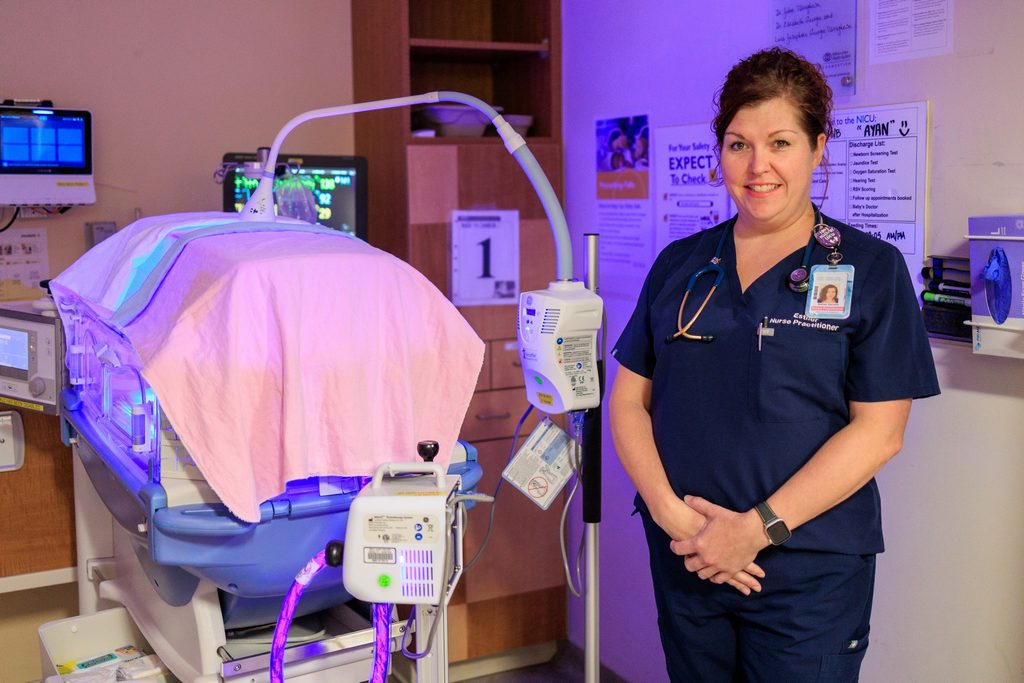
But when a newborn develops jaundice, those first days can suddenly include blood tests, careful monitoring, and time under a distinctive blue light.
Jaundice is caused by excessive levels of bilirubin in the blood. It is common in newborns and usually resolves on its own, but for some babies—particularly those born prematurely—bilirubin levels can rise high enough to require treatment.
At William Osler Health System (Osler), a type of phototherapy that uses specialized blue light helps a baby’s body safely eliminate excess bilirubin.
“Phototherapy saves a lot of babies,” says Esther Decaire, Nurse Practitioner at Osler. “It may seem simple that you’re going under lights, but it’s actually not. The disease process itself is pretty significant. If bilirubin levels become too high, they can cause permanent brain damage and, in the most severe cases, can be life-threatening.”
Now, thanks to a generous grant from the Sandra Schmirler Foundation, Osler is purchasing four new phototherapy units for the Neonatal Intensive Care Units (NICUs) at Brampton Civic Hospital and Etobicoke General Hospital.
The new units are smaller and more streamlined than older equipment, making it easier for nurses to access babies and for parents to stay connected during treatment. Depending on their baby’s condition, parents may be able to take their baby out for feeding and cuddles before returning them to the light.
“The parents can get in there, and it’s so easy to use,” says Esther. “They can touch their baby, and the nurses can get better access to the baby.”
Having additional units also means Osler’s teams can respond more quickly when a baby needs treatment. Phototherapy may be needed in the NICU, mother baby unit, paediatrics or even the Emergency Department, depending on where a baby presents and how urgently treatment is required.
“The earlier we start treatment when the baby needs it, the quicker baby gets better,” says Dr. Sangeet Kathuria, paediatrician, neonatologist and Osler’s Clinical Lead for the NICU.
For families, that can mean less time in hospital and, most importantly, more time together at home.
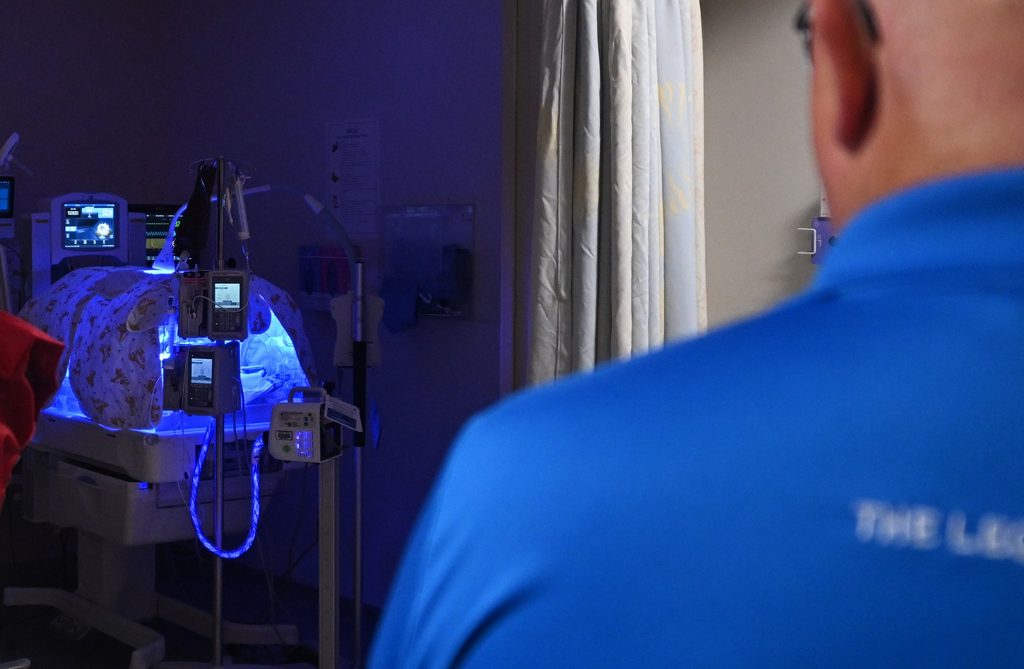
“Effective blue light therapy can mean a shorter hospital stay for babies and their families,” says Dr. Kathuria. “The sooner babies can safely go home, the sooner families can be together where they belong—in the comfort of their own home.”
The Sandra Schmirler Foundation’s investment is helping make better care possible for Osler’s smallest patients—ensuring this essential technology is available when and where it is needed, while supporting more precious moments between parents and their babies.
Stay in Touch!
Your donation has a lasting impact. Subscribe to our newsletter to learn about how your gift is making a difference.