


From Ideas to Impact

August 14, 2026 - Hospital Family Story, Stories
From Ideas to Impact: Dr. Veronique Boscart Helps Shape the Future of Innovation at Osler
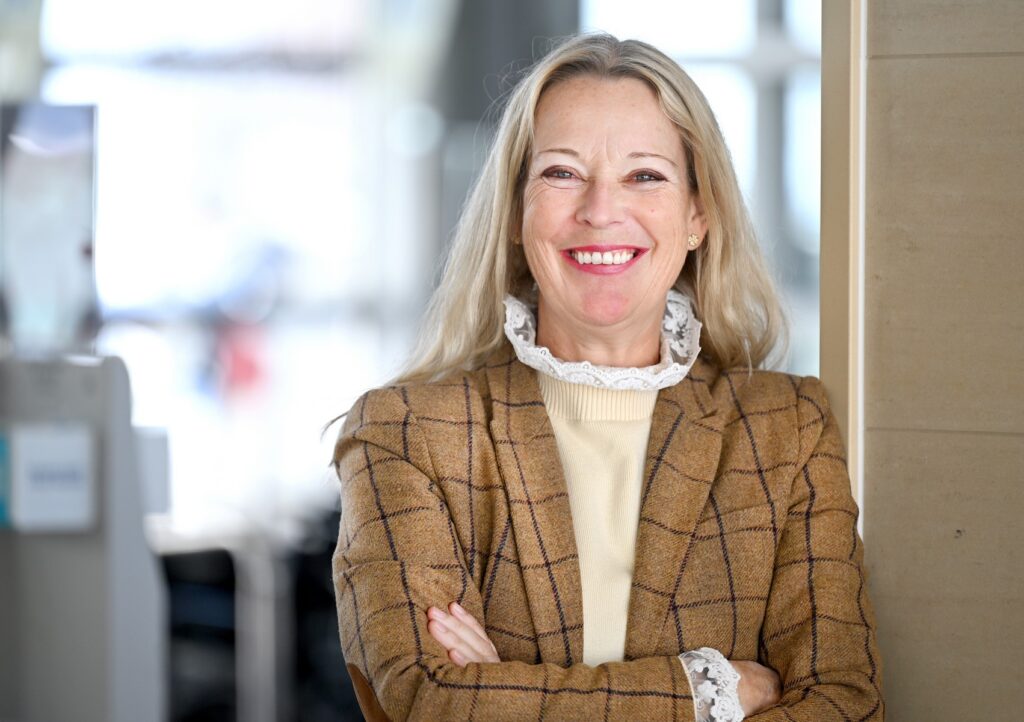
For Dr. Veronique Boscart, innovation in health care doesn’t begin with technology—it begins with curiosity.
“How can we do this better for patients?” It’s a question that has guided her career and now shapes her work as Chief Scientific Officer at the Osler Research Institute for Health Innovation (ORIHI), where she leads a growing team focused on transforming real-world clinical challenges into research-driven solutions.
“Health care innovation doesn’t start in a lab,” she says. “It starts at the bedside—when clinicians notice something isn’t working as well as it could and ask how we can improve it.”
Since joining Osler, Dr. Boscart has helped shape a strategic vision for research that moves beyond theory, embedding innovation directly into clinical care. The goal is simple but ambitious: turn everyday challenges into opportunities to improve patient experiences, outcomes and system-wide practices.
Her path to this work has been anything but linear. Originally trained as a nurse in Europe, she built a career that bridges clinical practice, research, and education, always grounded in a deep commitment to understanding the patient experience. That perspective continues to influence her approach today.
“It’s not enough to recognize gaps,” she explains. “We need to test ideas, generate evidence and implement changes that make a real difference.”
That mindset ultimately drew her to Osler—an organization she believes is uniquely positioned for innovation because of its strong connection to one of Canada’s most diverse and rapidly growing communities.
Today, she oversees research across the organization, working alongside clinicians, scientists, and partners to identify opportunities where innovation can drive meaningful change. Under her leadership, ORIHI has continued to grow, bringing together a multidisciplinary team of nearly 40 members, including clinical researchers, ethicists, data specialists, and knowledge translation experts.
“Research gives us the chance to pause and ask why we do things the way we do—and whether there’s a better way,” she says. “When we apply those learnings, the impact extends far beyond a single program or department.”
As ORIHI continues to grow, that work is helping shape a future where innovation is not separate from care—but embedded within it, improving outcomes for patients today and for generations to come.
Stay in Touch!
Your donation has a lasting impact. Subscribe to our newsletter to learn about how your gift is making a difference.