



How Osler’s Advanced Diagnostics is Changing What’s Possible in Cancer Care

June 19, 2026 - Donor Story, Hospital Family Story, Patient Story, Stories
How Osler’s Advanced Diagnostics is Changing What’s Possible in Cancer Care
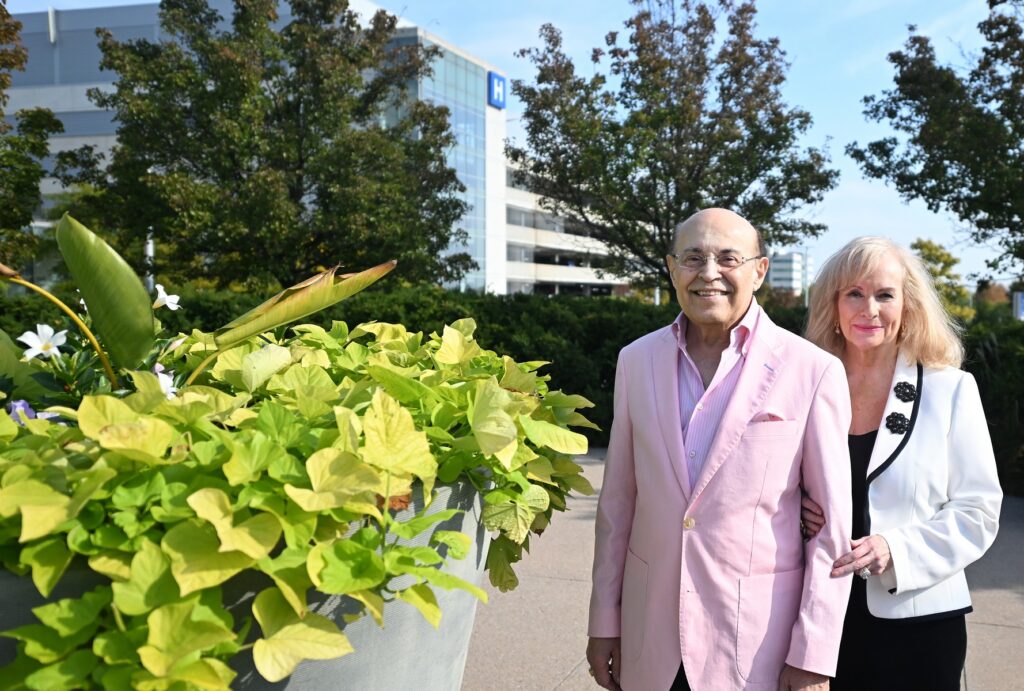
For more than four decades, Dr. Zak Kidy was the one caring for others, as an ophthalmologist serving patients in Brampton. He and his wife, Louise, built their home just minutes from Brampton Civic Hospital and their lives around William Osler Health System (Osler)—Dr. Kidy as an Osler physician while Louise spent years giving back through volunteer leadership and community fundraising.
Then, in a different season of life, they found themselves on the other side of the experience.
A diagnosis of severe prostate cancer set off a difficult stretch of treatment and uncertainty. Like many families, the Kidys were thrust into a journey that can feel overwhelming: specialists, changing plans, and the question that sits behind every appointment—what happens next?
Then, a deeper look at the biology of Dr. Kidy’s cancer ultimately changed everything.
As part of Dr. Kidy’s workup, his care team pursued advanced tumour testing—an approach that looks beyond where a cancer starts and instead examines what’s driving it at the molecular level.
That’s where Dr. Brandon Sheffield, a pathologist at Osler played a pivotal role.
Using immunohistochemistry (IHC), Dr. Sheffield’s team identified an MMR (mismatch repair) deficiency in Dr. Kidy’s tumour—an uncommon finding in prostate cancer, but one that can signal a strong likelihood of response to immunotherapy.
This kind of testing is made possible through Osler’s Advanced Diagnostics program, an integrated initiative launched through collaboration between the health system’s Laboratory Medicine, Oncology, and Research teams. Designed to bring cutting-edge molecular testing directly into the clinical workflow, the program has also produced numerous research studies over the past decade in partnership with Osler’s research department and, more recently, Osler Research Institute for Health Innovation (ORIHI).
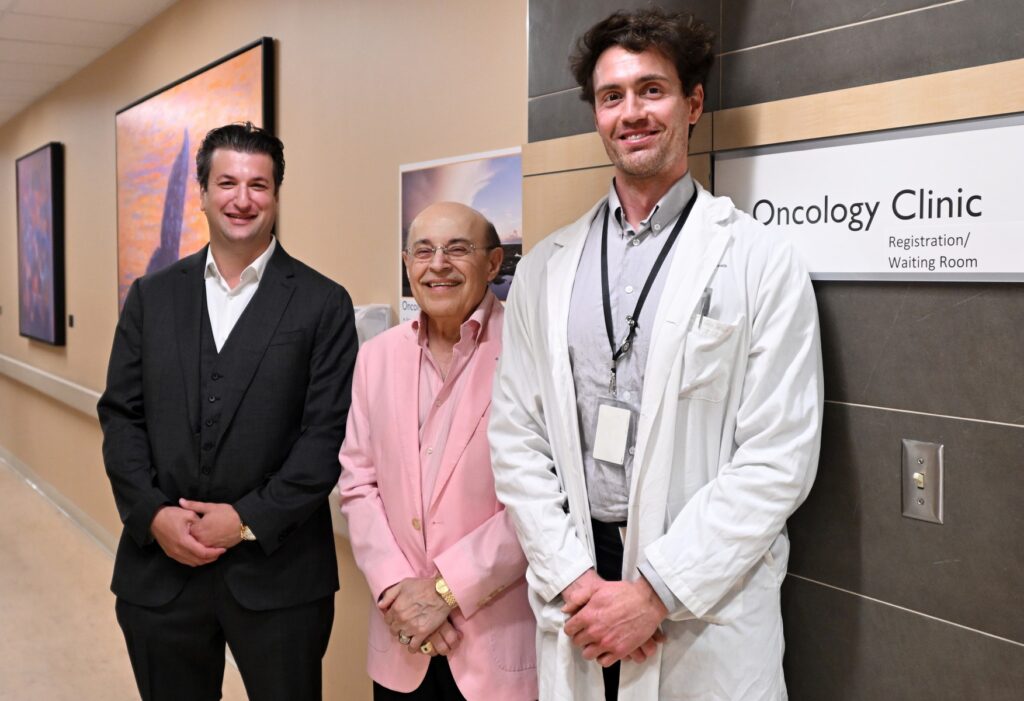
“In some cases, cancer cells can’t repair their DNA properly,” Dr. Sheffield says. “That causes changes to pile up, making the cancer easier for the immune system to spot and fight with the right treatment.”
This is the heart of precision oncology: moving away from treating cancers only by body part and toward treating them based on the specific molecular features that are driving the disease.
Dr. Marco Iafolla, Dr. Kidy’s medical oncologist at Osler, explains that Dr. Kidy initially received standard guideline-based treatment—because that’s still the best-supported first step for most prostate cancers. But as the cancer progressed and quality of life declined, the team made a deliberate shift.
“We proceeded with immunotherapy to exploit the molecular changes identified through immunohistochemistry,” Dr. Iafolla says. “And he’s had a fantastic response.”
The results were dramatic: Dr. Kidy’s PSA (Prostate-Specific Antigen) dropped steadily, the cancer burden decreased, and he regained strength and stability. Today, Louise describes the change simply: “He got his life back.”
Today, Advanced Diagnostics is quietly setting new standards across the province.
Andrea Beharry, Manager, Clinical Services, Advanced Diagnostics, says Osler’s model is different by design. Rather than keeping molecular testing and immunohistochemistry in separate silos, Osler combined them into one integrated service—embedded directly into the pathology workflow.
“You won’t see this model anywhere else,” Andrea says. “The same team is cutting tissue for immunohistochemistry and molecular testing at the same time. That means we preserve tissue and move faster, with better continuity.” Instead of splitting cancer testing across multiple labs and teams, Osler brings it together in one integrated service, embedded directly into pathology.
This matters because biopsy samples are often tiny, and every day waiting for results can delay treatment decisions.
“Every slide represents a patient waiting for answers,” she says. “Our team takes that responsibility to heart.”
Osler’s Advanced Diagnostics program has grown rapidly since its inception because the demand for timely biomarker testing has exploded across modern cancer care.
• Osler runs approximately 95,000 immunohistochemistry slides per year.
• Molecular testing volume has expanded from about 500 cases per year to more than 3,000, with over 30 per cent growth year over year.
• The program has achieved a world-leading median turnaround time of just three business days—even as testing volumes continue to grow.
That speed is one reason institutions across Ontario now send cases to Osler— from northern communities to southwestern Ontario and many centres in between.
"The future of cancer care is precision oncology. It’s about understanding what’s driving a tumour at a molecular level and using that information to guide smarter, more effective treatment decisions."
DR. BRANDON SHEFFIELD
And Osler continues to lead in new tools that reduce barriers for patients, including in-house liquid biopsy—a blood-based test that can identify tumour mutations without an invasive procedure, helping guide treatment when repeat biopsies aren’t possible or would be unsafe.
Osler’s cancer program has expanded significantly in recent years, introducing clinical trials, specialized services, and new models of care designed to meet patients where they are, close to home.
Dr. Sheffield sees advanced diagnostics as central to that evolution. “The future of cancer care is precision oncology,” he says. “It’s about understanding what’s driving a tumour at a molecular level and using that information to guide smarter, more effective treatment decisions.”
That future is already taking shape at Osler. Through its Advanced Diagnostics program, the health system is delivering testing and insights that many patients once had to travel downtown—or even out of province—to access. Today, those answers are being generated right here in Brampton and shared with clinicians across Ontario.
Click the link below to explore more stories of innovation and care at William Osler Health System.
Stay in Touch!
Your donation has a lasting impact. Subscribe to our newsletter to learn about how your gift is making a difference.